ADVERTISEMENT
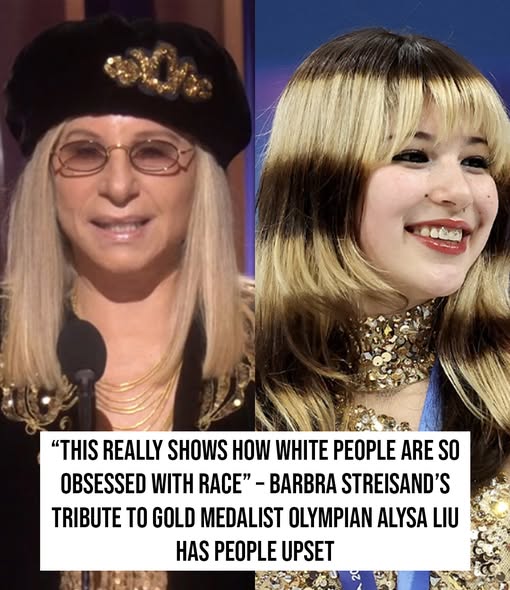
The tribute was meant to be straightforward: an iconic performer applauding a young champion at the height of her moment. Instead, when Barbra Streisand publicly congratulated Alysa Liu on her Olympic triumph, the message set off a widening debate about culture, generational perspective, and the weight of words in the digital era. What was intended as warmth quickly became controversy. Some readers found it touching and sincere. Others viewed it as awkward or misplaced. As reactions multiplied across social platforms, the celebration itself began to fade behind the argument.
Streisand’s congratulatory note attempted to frame Liu’s victory within her own personal memories. She referenced a Chinese family who had once cared for her in Brooklyn, drawing a connection between her past and Liu’s present achievement. In her mind, the gesture appeared to be one of continuity — a way of honoring the people who shaped her life while celebrating a young athlete whose heritage forms part of her identity. Yet the message landed in a digital environment primed to analyze, critique, and contextualize every public word. In a space where conversations about representation and identity are often immediate and intense, nuance can quickly be overshadowed.
ADVERTISEMENT
