ADVERTISEMENT
The Response from the Tongva Nation
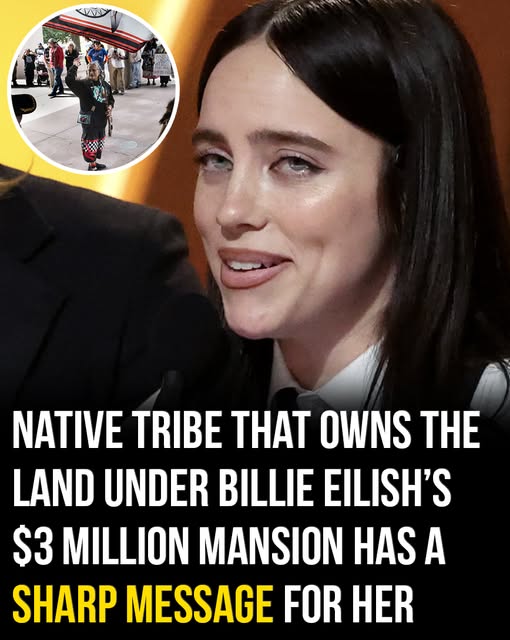
As the digital discourse intensified, the Gabrieleno Tongva tribe—the First People of the greater Los Angeles basin—offered a measured and clarifying response to the singer’s public stance. In an official statement, a spokesperson for the tribe acknowledged the visibility Eilish provided to the concept of “stolen land” but noted that the singer had not yet backed her words with direct tribal engagement.+1
The tribe expressed a desire for more specific acknowledgment in future discussions, emphasizing that general references to “stolen land” can sometimes obscure the specific living histories of the nations involved. They reached out to Eilish’s team to express appreciation for the sentiment but urged a shift toward naming the Gabrieleno Tongva territory explicitly. “It is our hope that in future discussions, the tribe can explicitly be referenced to ensure the public understands that the greater Los Angeles basin remains Gabrieleno Tongva territory,” the statement concluded.
A Growing Chorus of Critics
While the Tongva tribe sought a constructive dialogue, the political sphere erupted with calls for Eilish to move beyond symbolic gestures. The debate has become a lightning rod for broader arguments regarding “land acknowledgments”—the practice of recognizing Indigenous presence on land—and whether such statements carry weight without tangible restitution.
This sentiment was echoed by Florida Governor Ron DeSantis, who dismissed the singer’s rhetoric as “nonsense” and suggested she should “step up and forfeit her southern California mansion.” Tesla CEO Elon Musk signaled his agreement with a succinct “Exactly” in response to posts criticizing the singer. The common thread among these critiques is the demand for a “put up or shut up” approach to activism, with some suggesting that if Eilish truly believes the land is stolen, her continued residence there is a contradiction of her moral stance.
ADVERTISEMENT
