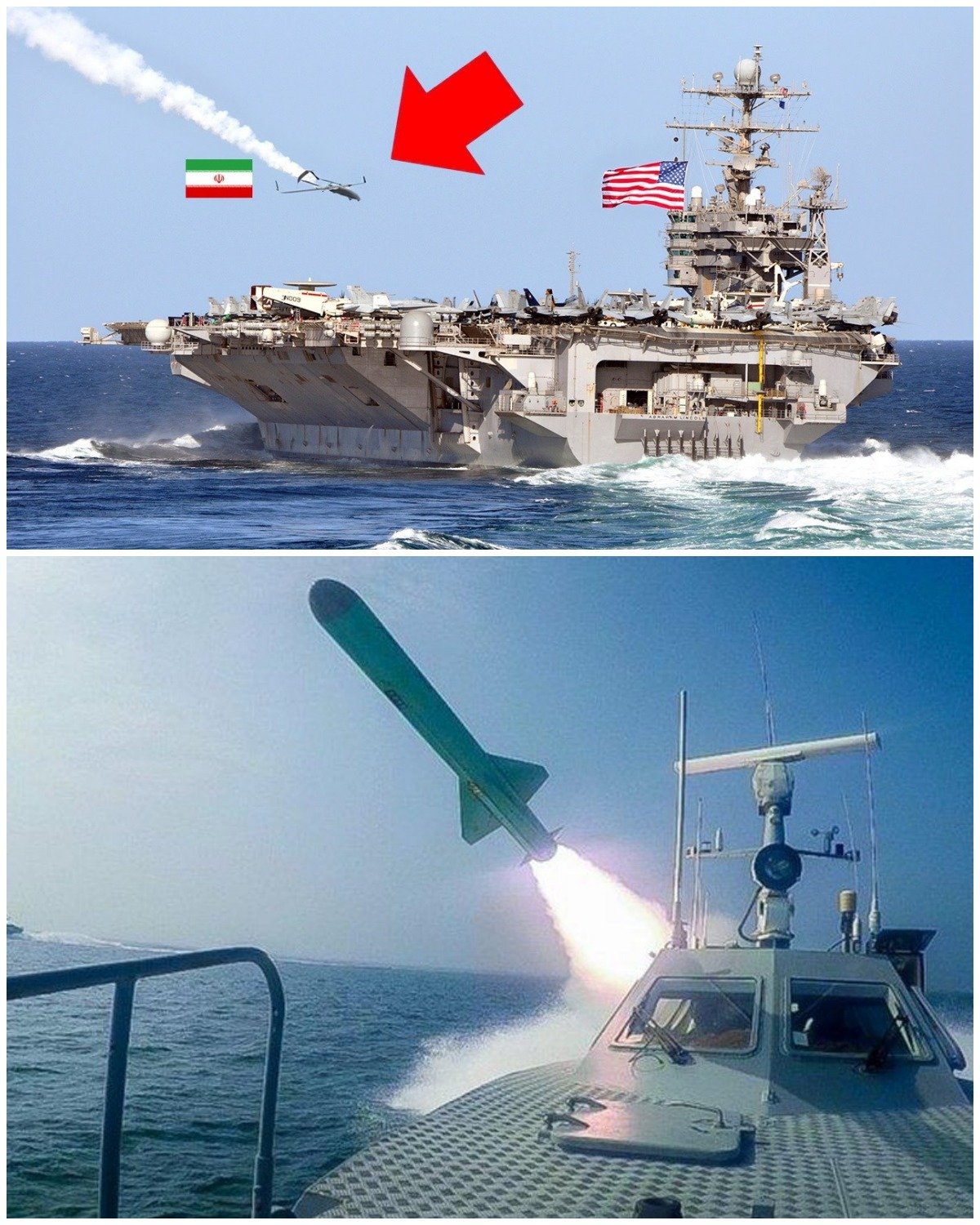
These drones are not sophisticated autonomous hunters. They rely primarily on satellite navigation and fixed targeting coordinates. Once airborne, they cannot dynamically reroute around defenses or adapt to electronic countermeasures in real time. Their strength lies in cost and volume, not flexibility.
Detection would not begin at visual range.
An E-2D Hawkeye airborne early warning aircraft orbiting tens of thousands of feet above the fleet would likely identify such contacts long before they approached engagement range. Its AN/APY-9 radar system is designed to track small, low-flying targets against complex backgrounds, feeding data through Cooperative Engagement Capability (CEC) networks that unify the entire strike group’s sensor picture.