ADVERTISEMENT
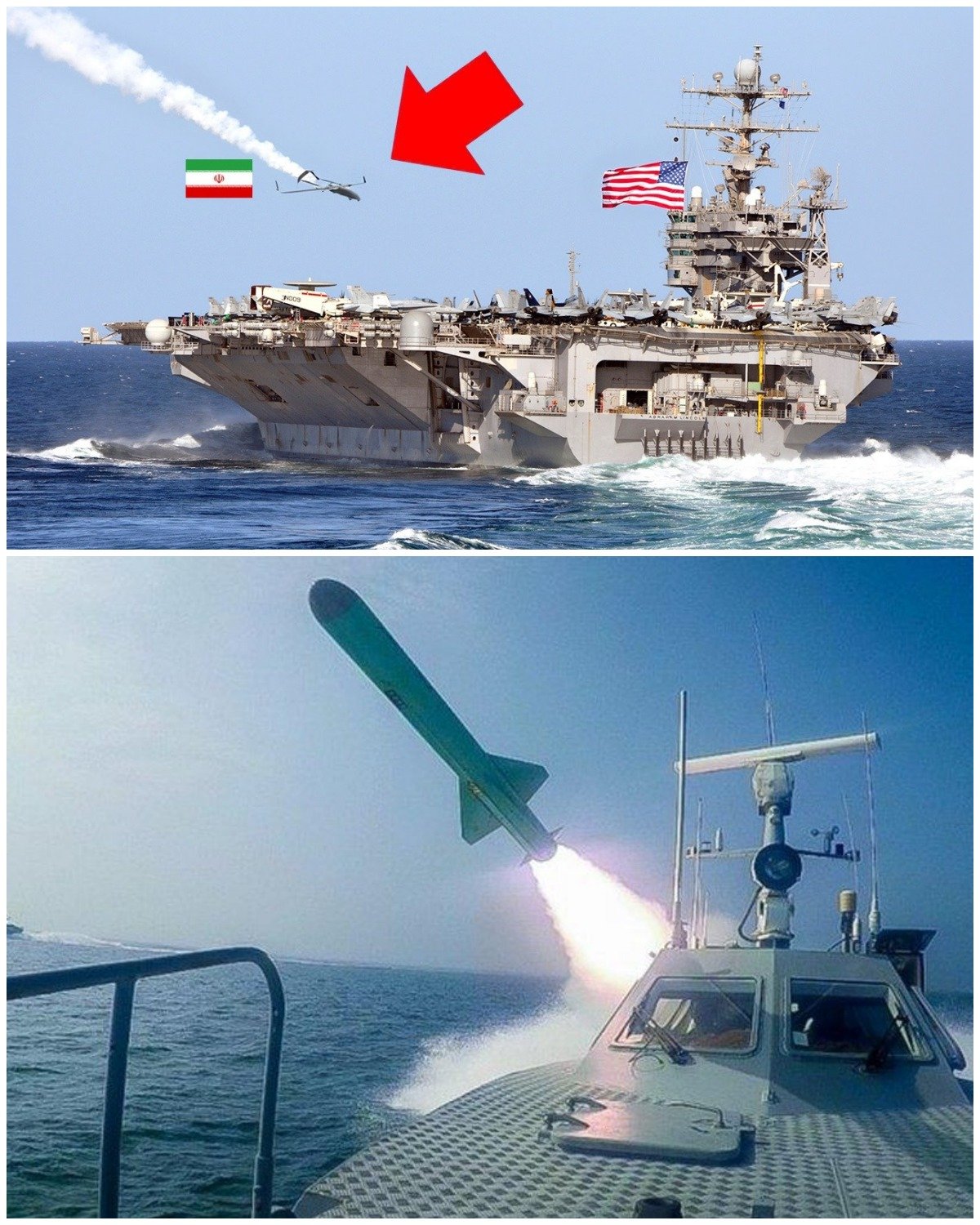
US Navy Launched Something That Shouldn’t Exist… Iran Can’t Stop It – story-veterans.com
An E-2D Hawkeye airborne early warning aircraft orbiting tens of thousands of feet above the fleet would likely identify such contacts long before they approached engagement range. Its AN/APY-9 radar system is designed to track small, low-flying targets against complex backgrounds, feeding data through Cooperative Engagement Capability (CEC) networks that unify the entire strike group’s sensor picture.
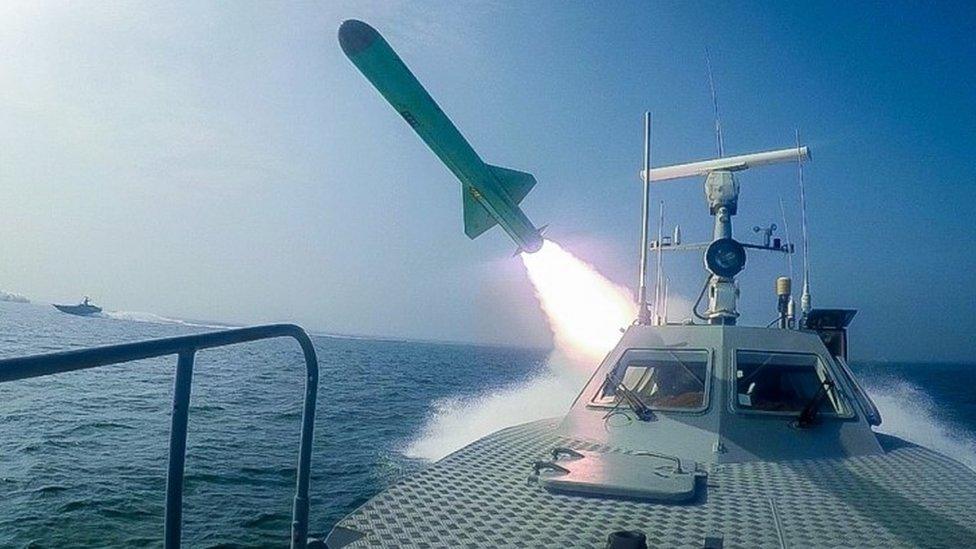
Initial engagements would likely rely on layered conventional defenses. Naval guns firing proximity-fused rounds can effectively neutralize slow-moving aerial targets at moderate range. Close-in weapon systems (CIWS), such as the Phalanx, are designed to shred incoming threats within a few kilometers of the ship. Rolling Airframe Missiles (RAM) and Standard Missiles (SM-2 or SM-6) extend that protective bubble outward.
Critics of traditional missile defense often point to cost asymmetry: interceptors costing millions of dollars versus drones ᴀssembled for tens of thousands. That arithmetic has shaped much of Iran’s drone doctrine. Saturation aims to exhaust magazines.

But magazine depth is no longer the only variable.
High-powered microwave weapons, in particular, are engineered to disrupt or destroy electronic components by overwhelming circuits with electromagnetic energy. Instead of detonating a drone, they can disable its guidance or control systems, causing it to lose stability and fall.

If operationally deployed, such systems would alter the economic equation. Instead of expending a missile for every incoming drone, a destroyer could potentially neutralize multiple targets within a single engagement cycle, limited primarily by power generation and thermal management rather than magazine count.
This does not make conventional weapons obsolete. Directed energy systems depend on targeting data. Low-flying drones skimming sea clutter can complicate radar discrimination. Environmental factors, geometry, and deconfliction with friendly interceptors introduce constraints. In a complex battle space that includes ballistic missiles, cruise missiles, and surface threats simultaneously, commanders must carefully coordinate engagement sectors to prevent interference between systems.
For example, a microwave beam does not distinguish between hostile and friendly electronics. If a defensive missile were pᴀssing through an active sector at the wrong moment, deconfliction timing would be critical. Modern Aegis combat systems are designed to automate much of this coordination, calculating engagement windows in milliseconds.
ADVERTISEMENT
