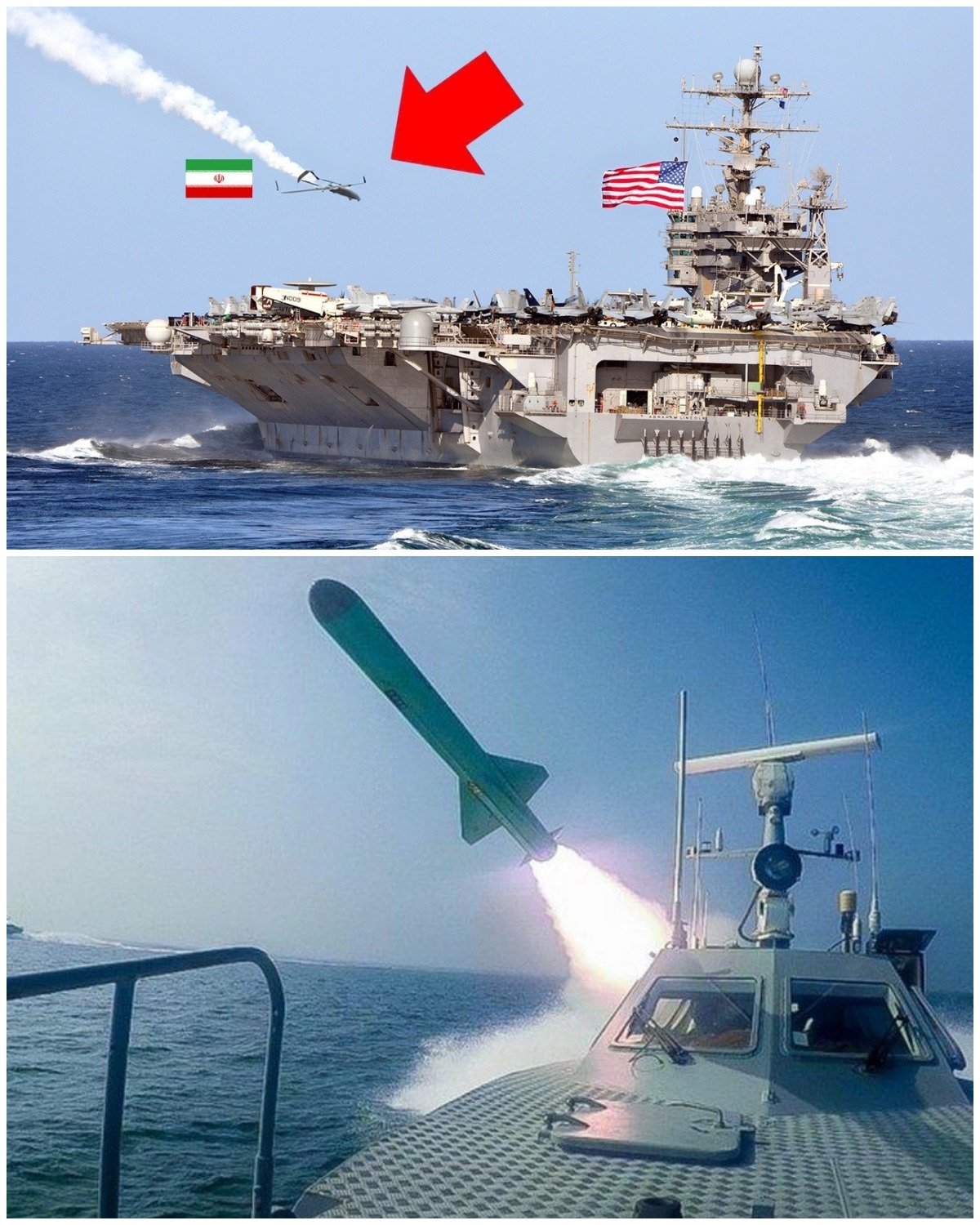
An E-2D Hawkeye airborne early warning aircraft orbiting tens of thousands of feet above the fleet would likely identify such contacts long before they approached engagement range. Its AN/APY-9 radar system is designed to track small, low-flying targets against complex backgrounds, feeding data through Cooperative Engagement Capability (CEC) networks that unify the entire strike group’s sensor picture.
In practice, this means a destroyer dozens of miles away could generate a firing solution using data it did not directly collect. The carrier group functions less as separate ships and more as a distributed, synchronized combat system.
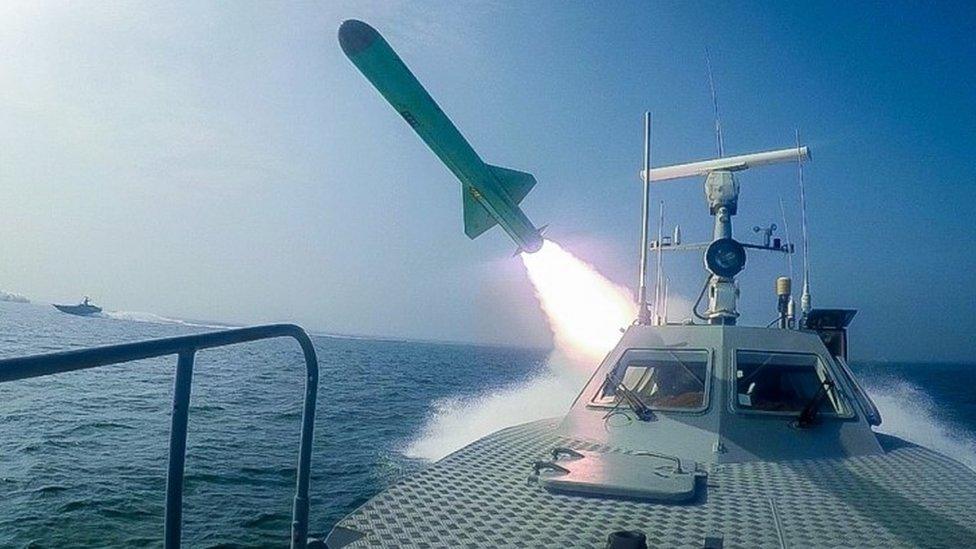
Initial engagements would likely rely on layered conventional defenses. Naval guns firing proximity-fused rounds can effectively neutralize slow-moving aerial targets at moderate range. Close-in weapon systems (CIWS), such as the Phalanx, are designed to shred incoming threats within a few kilometers of the ship. Rolling Airframe Missiles (RAM) and Standard Missiles (SM-2 or SM-6) extend that protective bubble outward.