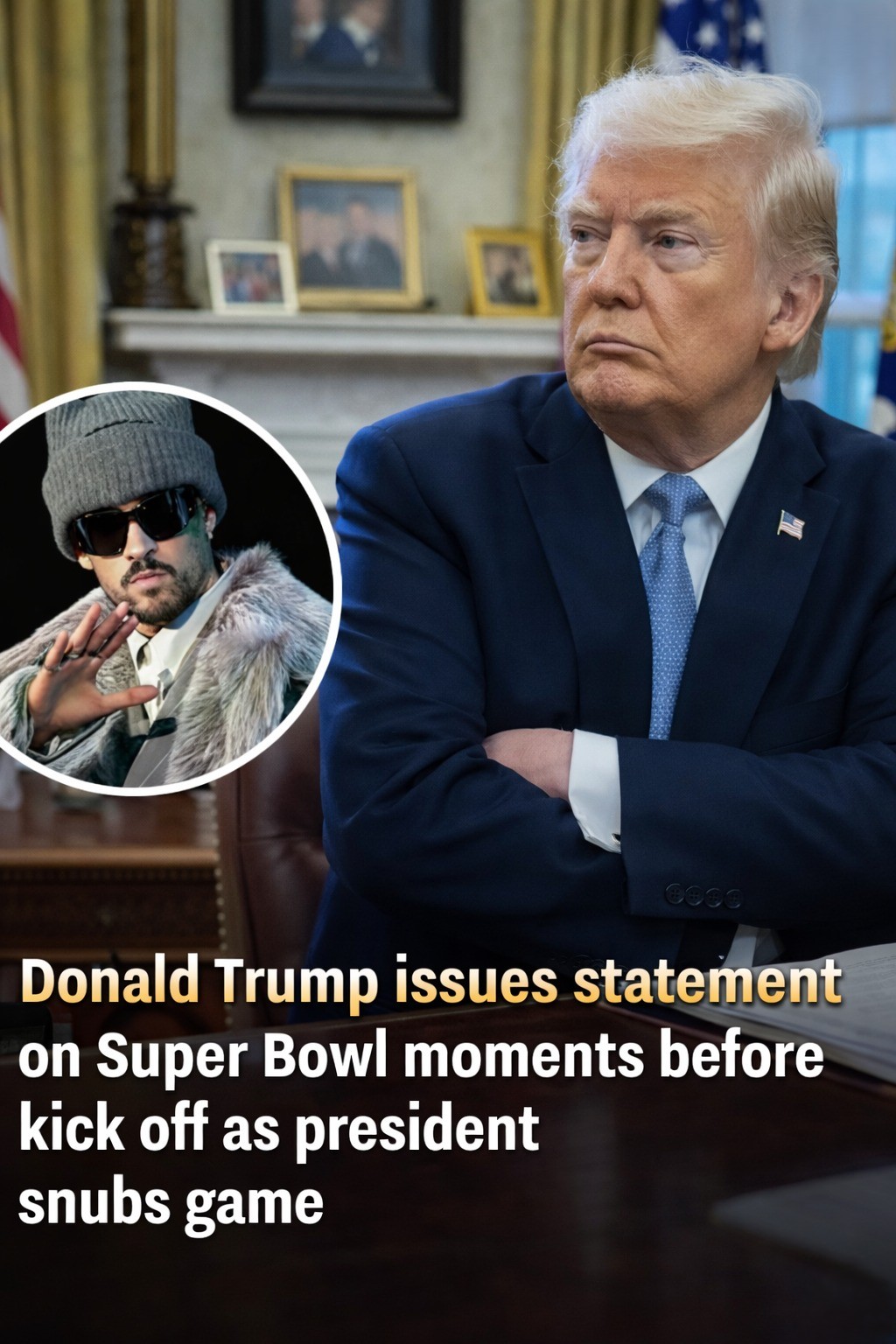
In the high-stakes arena of Super Bowl LX, held on February 8, 2026, the real competition seemed to occur not on the turf of Levi’s Stadium, but across the digital landscapes of social media. Moments before the Seattle Seahawks kicked off against the New England Patriots, Donald Trump released a statement that, on its face, was a quintessential tribute to an American institution. He celebrated the Super Bowl as a uniquely national tradition, offering well-wishes to both franchises and emphasizing the spirit of unity and dedication shared by players and fans alike. However, beneath the veneer of this patriotic greeting lay a complex masterclass in the theater of attention—a demonstration of how modern influence is wielded through strategic presence and calculated absence.
In the contemporary media ecosystem, physical presence at a national ritual is no longer the primary requirement for relevance. For decades, leaders have used the Super Bowl as a stage to affirm shared identity, sitting in high-profile booths to signal their connection to the common man. Trump’s decision to skip the trip to California while remaining the loudest voice in the room digitally reflects a fundamental shift in the nature of leadership. Influence is now measured not in miles traveled, but in moments captured. By staying away while flooding the digital space with commentary, he positioned himself as a figure who exists outside the traditional establishment rituals, yet remains central to the public consciousness. It was a strategy of symbolic participation without physical proximity—a way of saying that the event mattered because he was talking about it, not because he was there.