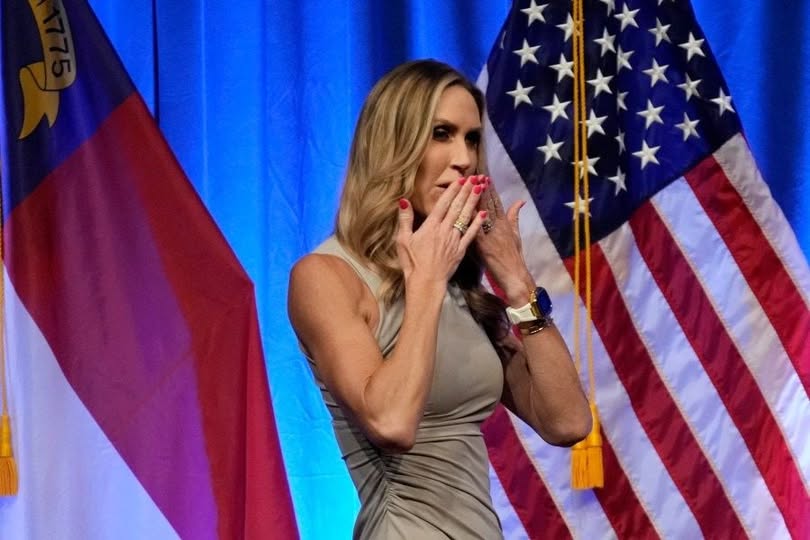
Washington, D.C. — The Republican National Committee has officially entered an unprecedented new era, one defined by near-total control by Donald Trump and his closest allies. Over the past several months, the party has undergone a remarkable consolidation of influence, with Chairman Michael Whatley, Co-Chair KC Crosbie, and former co-chair Lara Trump exercising a level of authority rarely seen in modern American politics. The RNC, once a diverse and ideologically broad institution with competing factions and independent decision-making, now operates as a highly centralized machine, fully aligned with the priorities and strategic goals of the former president and his political network.
Political analysts describe this consolidation as both “historic” and “fraught with risk,” reflecting the deeply polarized nature of the discussion around Trump’s dominance. For supporters, this alignment ensures unity, discipline, and a razor-sharp focus on victory in the upcoming midterm elections and beyond. By centralizing authority and removing the internal friction that has historically hampered party operations, the pro-Trump faction argues that the GOP is more capable than ever of executing a coordinated national strategy, from fundraising and messaging to voter outreach and legal defense. For critics, however, the transformation represents the effective end of the RNC as an independent political body. They warn that what was once an institution designed to support the broader party membership has now become, in effect, a personal political war chest for a single family, with decisions and priorities determined less by party consensus than by loyalty to Trump.