ADVERTISEMENT
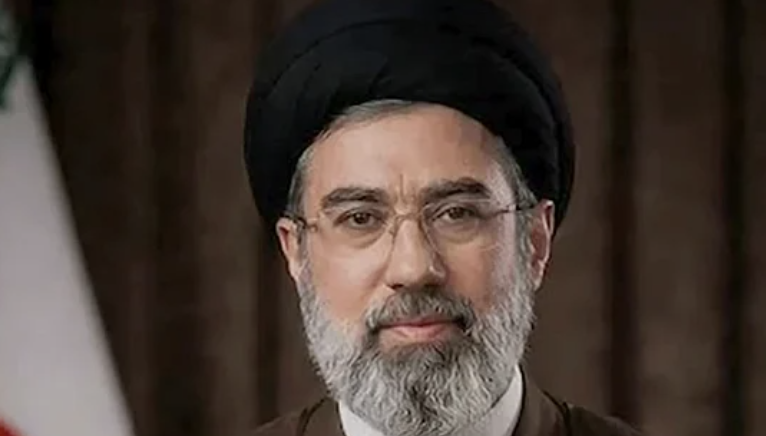
A claim about the private life of Iran’s new supreme leader, Ayatollah Mojtaba Khamenei, burst into public view on Monday after the New York Post reported that President Donald Trump had been briefed on U.S. intelligence assessing that Khamenei was “probably gay,” with the paper saying American officials regarded the information as credible and tied it to long-running concerns inside Iran’s ruling establishment about his suitability to lead the Islamic Republic. The report said Trump reacted with surprise and laughter when the information was presented to him.
Against that backdrop, the report about his sexuality landed with unusual political force. CBS News had already reported that U.S. intelligence circulated to Trump and a small inner circle concluded that the late Ali Khamenei had serious misgivings about his son taking power. According to CBS, that analysis found Mojtaba was seen as not very bright and unqualified, and that intelligence gathered by the United States indicated the elder Khamenei knew his son had “issues in his personal life.” CBS did not itself specify those issues in the way the New York Post later did, but it established that American intelligence agencies were already briefing senior U.S. officials on sensitive personal concerns surrounding the new Iranian leader.
In ordinary circumstances, such claims would be explosive for any leader. In Iran, they carry an additional and potentially extreme significance because same-sex conduct is criminalised and can carry the death penalty under the country’s legal system. Human Dignity Trust, which tracks laws affecting LGBT people worldwide, says Iran criminalises same-sex sexual activity between both men and women and that the maximum sentence is death. That legal and cultural reality explains why any allegation about the sexual orientation of a figure at the apex of Iran’s theocratic state would have consequences far beyond private scandal, reaching directly into questions of religious legitimacy, factional power and personal vulnerability.
It also helps explain why U.S. officials would treat such material as politically relevant even if Trump himself appeared dismissive about its practical importance. CBS reported that in private the president had suggested he was unsure the information mattered, and was more focused on the broader view that Iran may now be effectively leaderless, with the Revolutionary Guards and the supreme leader’s office exercising the real power. Reuters has reported a similar picture, with senior Iranian sources saying the Guards have become even more dominant since the war began and may now be dictating the strategic line.
Mojtaba Khamenei’s rise has long been contentious inside and outside Iran even without the latest claims. Reuters described him as a backroom operator who spent years running his father’s office, known as the beyt, while rarely speaking in public and remaining obscure to many ordinary Iranians. He has been seen as closely aligned with the Revolutionary Guards, an institution that already held major economic, military and political power before the current war and has now emerged as the clear centre of authority in the Islamic Republic.
Trump, for his part, has repeatedly sought to undermine the new leader in public. CBS reported that he had privately and publicly signalled that Ali Khamenei himself did not want Mojtaba to take over, and the broadcaster quoted him calling the son a “lightweight” and an “unacceptable” leader for Iran. Reuters later quoted him saying that the absence of any public appearance was highly unusual and fed doubts about whether Tehran’s new ruler was even still alive.
The result is that the allegation now hanging over Mojtaba Khamenei is inseparable from the larger crisis of legitimacy engulfing Iran’s leadership after the killing of his father. What might otherwise have been treated as rumour or intelligence gossip has been thrust into a setting in which rival states are openly discussing succession, injury, control of the regime and the future direction of the war. Whether the underlying claim can ever be publicly substantiated is unclear. What is already clear is that it has become part of a broader U.S. intelligence picture portraying Iran’s new supreme leader as a weak, wounded and politically constrained figure whose personal life, health and authority are all under question at the very moment he is supposed to embody the continuity of the Islamic Republic.
ADVERTISEMENT
