ADVERTISEMENT
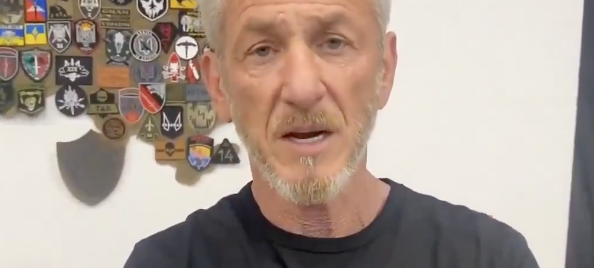
Sean Penn was photographed in Kyiv on Monday, less than 24 hours after winning the Academy Award for best supporting actor and choosing not to appear at the 98th Oscars in Los Angeles, a decision that quickly turned a routine awards-season absence into a political statement about where the actor believed he needed to be. Reuters reported that Penn, 65, travelled to the Ukrainian capital by train and met President Volodymyr Zelenskyy after skipping the ceremony where he was honoured for his performance in One Battle After Another. Ukraine’s state railway operator said it had kept the trip secret until his arrival, then declared that Penn had chosen Ukraine over the Oscars.
This latest award, however, was rapidly overshadowed by the location in which Penn chose to spend the next day. Reuters reported that the actor was seen in Kyiv’s fortified government district, where security remains intense more than four years after Russia launched its full-scale invasion. Penn has made repeated visits to Ukraine since 2022 and has become one of the most visible Hollywood supporters of the country’s war effort, using both his celebrity and his political profile to keep attention focused on the conflict even as international news cycles have shifted elsewhere.

That symbolic gesture became one of the defining images of Penn’s advocacy, but it was not the only one. Reuters reported in 2022 that Russia sanctioned Penn over his criticism of the war, placing him on a list with other American figures who had publicly backed Ukraine. His support has therefore carried consequences beyond celebrity headlines, feeding into the broader propaganda and diplomatic struggle that has accompanied the fighting. Penn’s name has, for the past four years, sat at the intersection of film stardom, activism and wartime messaging in a way few actors have embraced so openly.
Penn also turned that commitment into documentary work. Reuters said he filmed a documentary about Russia’s invasion that premiered in February 2023, and Paramount+ has promoted Superpower as a film centred on Zelenskyy and the Ukrainian people’s fight for freedom. The documentary, co-directed by Penn and Aaron Kaufman, began as a portrait of Zelenskyy’s rise from entertainer to president but was overtaken by the invasion itself, giving Penn unusual access to both the Ukrainian leader and the atmosphere of a country suddenly at war. That background helps explain why his visit this week was not treated as a surprise inside Ukrainian official circles, even if it startled Oscar viewers in the United States.
The decision to skip the Oscars also fits a longer pattern in Penn’s public posture toward the Academy and the politics surrounding it. In a 2023 interview with Variety, he referred back to the 2022 ceremony, when the Academy did not include a Zelenskyy appearance despite the early, chaotic weeks of the invasion. Penn said at the time that he had considered melting down his Oscars into bullets for Ukraine, language that reflected both anger and theatrical provocation. Later, one of those statuettes was physically handed to Zelenskyy in Kyiv. This week’s trip, coming on the night of another Oscar victory, turned that older rhetoric into something more concrete: he again placed Ukraine ahead of Hollywood ritual.
For Zelenskyy, the visit also served a clear purpose. Celebrity backing does not alter military realities on the battlefield, but it does help sustain international attention, particularly from American audiences whose focus can drift as wars stretch on. Penn’s presence in Kyiv, timed almost exactly with one of the most watched entertainment broadcasts in the world, delivered Ukraine another burst of visibility and another reminder that some of its best-known foreign supporters remain willing to show up in person. The railway operator’s triumphant message and Zelenskyy’s warm public thanks suggested that Ukrainian officials understood the symbolism immediately.
For Penn, the trip reinforced a version of himself that has become more central with age: not simply actor or filmmaker, but political participant. His third Oscar now sits alongside a record of repeated wartime visits, official honours from Ukraine and a relationship with Zelenskyy that has moved from documentary access to public solidarity. Hollywood gave him another trophy on Sunday night. By Monday, he was in Kyiv, making clear that he regarded the more meaningful stage as somewhere else.
ADVERTISEMENT
