ADVERTISEMENT
A week after the funeral, Silas drove up the winding dirt path to the estate. The house was a relic of neglect; the green paint was flaking off in long, jaundiced strips, and the porch moaned under his weight. But it was the tree that dominated the view. It was larger than Silas remembered, its roots aggressively heaving up the brick walkway as if trying to reclaim the earth from the house itself.
Silas had no intention of living in the shadow of his brother’s ghosts. His plan was pragmatic: renovate the house, clear the overgrown lot, and sell the property to the highest bidder. To do that, the tree had to go. It was an eyesore that threatened the foundation of the house, a magnificent but dangerous giant.
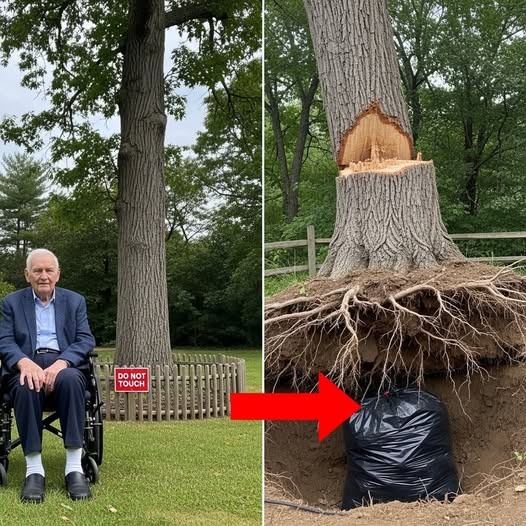
The logging crew arrived two days later with the mechanical roar of chainsaws and the heavy scent of diesel. It took less than an hour to bring the sentinel down. When the oak finally gave way, it hit the ground with a thundering crack that seemed to vibrate through Silas’s very bones. As the dust settled and the birds that had nested in its canopy fled into the pines, the loggers noticed the first peculiarity.
The following morning, a gnawing curiosity—the kind that keeps a man awake in the small hours—drove Silas back to the yard. He took a shovel from the shed and began to dig into the soft, dark earth at the center of the hollow stump. He dug until his shirt was plastered to his back and the sun began to dip behind the jagged mountain peaks. He was on the verge of quitting, convinced he was chasing a phantom, when the blade of his shovel struck something hard and metallic.
With trembling hands, Silas cleared away the dirt to reveal a heavy, oxidized steel footlocker. It was a military-issue chest, the kind used by soldiers in the 1960s. The lock had long ago rusted away, requiring only a firm pry from the shovel to snap. As the lid creaked open, Silas didn’t find the gold or buried treasure he had half-expected. Instead, he found the weight of a brother’s soul.
ADVERTISEMENT
