ADVERTISEMENT
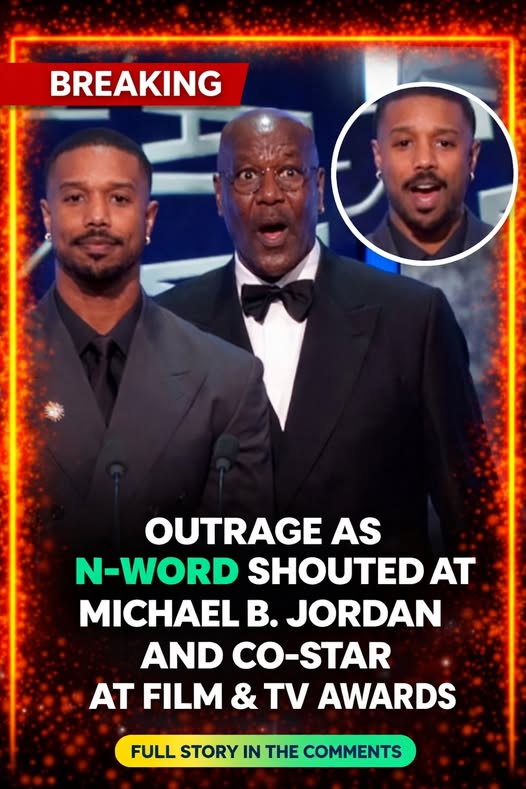
The room froze. Michael B. Jordan stood under the bright stage lights, the cameras rolling, the eyes of the world focused on him, when a single, explosive sound shattered the polished calm of the BAFTA ceremony. A racial slur—harsh, raw, and impossible to ignore—sliced through the silence. It was not supposed to happen, not in a room designed for celebration and recognition, not in a hall where decades of actors, directors, and creators had come to honor their peers. And yet, there it was: the word that had the power to wound, to provoke, to haunt.
What unfolded at London’s Royal Festival Hall was more than a disruption—it was a collision of two brutal realities. On one side, the immediate, visceral pain of hearing a racial slur in a prestigious, public setting; on the other, the devastating, often misunderstood truth of Tourette syndrome: for some individuals, the worst words imaginable can escape involuntarily, beyond their control, beyond their intent. The slur, uttered by Davidson, was not a choice, yet the impact on the audience, on viewers around the globe, was undeniable. Within seconds, the moment rippled through social media, news outlets, and public discourse, becoming a flashpoint for outrage, debate, and confusion.
ADVERTISEMENT
