ADVERTISEMENT
In the Old Testament, the act of burial was treated with immense gravity. Figures of monumental faith, such as Abraham and Moses, were laid to rest in the earth, and the denial of a proper burial was often viewed as a significant tragedy or a sign of divine judgment. This cultural preference was not accidental; it was rooted in a specific understanding of the human person. For the ancient Hebrews, and subsequently for early Christians, the body was not a mere vessel to be discarded once the soul had departed. It was seen as an integral part of the individual, created by God and destined for a future restoration.
Despite this strong traditional preference, a rigorous study of the Bible reveals a surprising silence: there is no explicit scriptural prohibition against cremation. There is no “thou shalt not burn.” While the Bible contains instances where bodies were burned, these were usually exceptional circumstances—often related to extreme judgment or the prevention of the desecration of remains in wartime. Because there is no direct moral law forbidding it, many modern theologians argue that cremation falls under the category of Christian liberty. They suggest that while burial may be the “biblical” custom, it is not a “biblical” requirement for salvation.
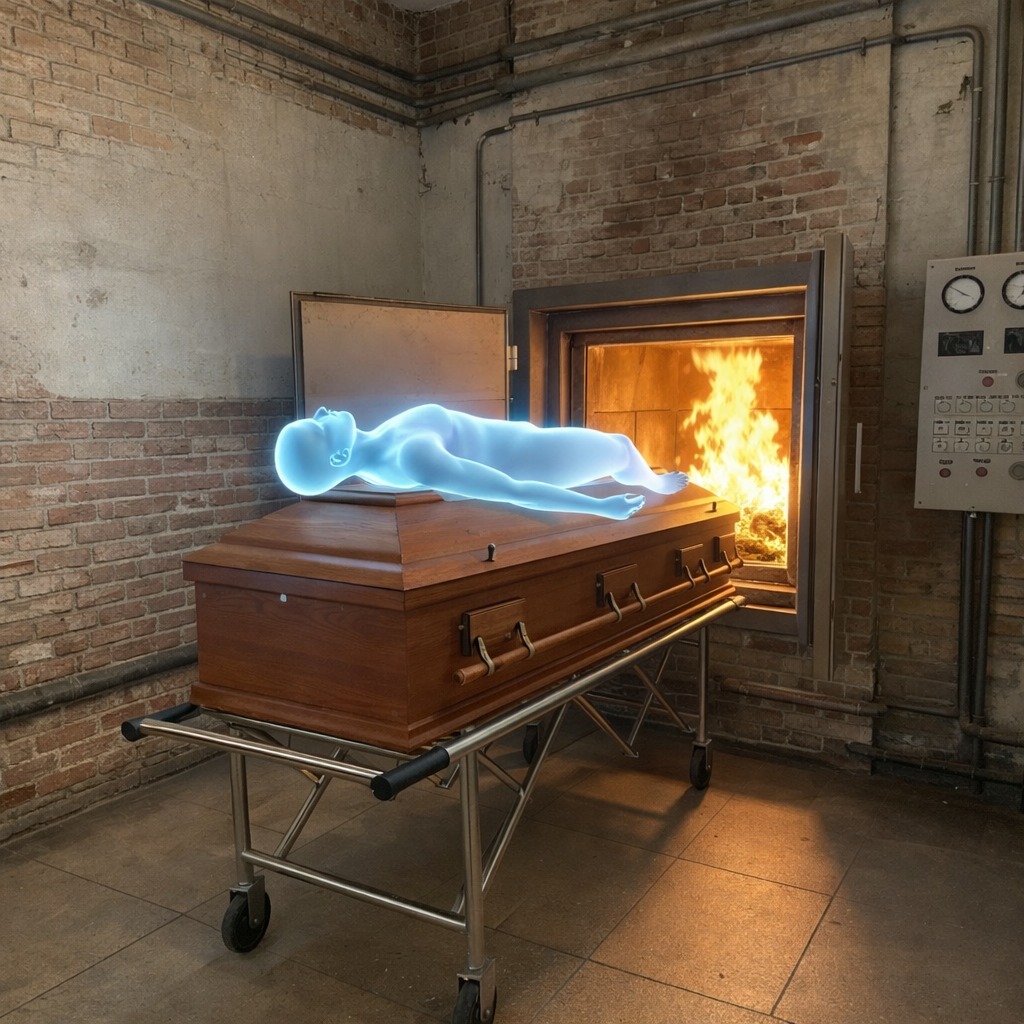
The debate often shifts toward the theological concept of the body as the “temple of the Holy Spirit.” Some believers argue that cremation represents a violent destruction of that temple, suggesting a lack of reverence for the physical form that God crafted. They worry that choosing to accelerate the natural process of decomposition through fire might signal a lack of faith in God’s ability to resurrect the dead. On the other side of the discourse, scholars point out that the physical state of the remains is irrelevant to the Creator’s power. If God can call the universe into being from nothingness, He is certainly capable of reconstituting a resurrected body regardless of whether the original remains were reclaimed by the sea, lost to fire, or slowly turned to dust in a wooden casket. The sovereignty of God over death is not limited by the chemistry of the remains.
ADVERTISEMENT
