ADVERTISEMENT
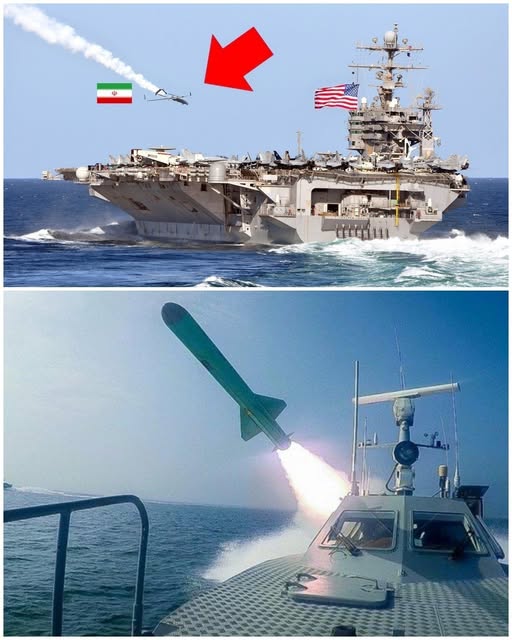
These drones are not advanced autonomous systems. They mainly rely on satellite navigation and predetermined target coordinates. Once launched, they cannot easily change course to avoid defenses or adapt to electronic interference. Their main advantage lies in their low cost and the ability to deploy them in large numbers.
An E-2D Hawkeye airborne early-warning aircraft flying high above the fleet could detect incoming targets at significant distances. Its AN/APY-9 radar is designed to track small, low-flying objects even in complicated environments. The information is shared across Cooperative Engagement Capability networks, creating a unified sensor picture for the entire strike group.
In practical terms, this allows a destroyer dozens of miles away to fire using data collected by another platform. The carrier strike group therefore operates less like separate ships and more like a single, integrated combat system.
Critics often highlight the cost imbalance in missile defense: interceptors costing millions of dollars compared with drones that may cost only tens of thousands. This imbalance has influenced Iran’s drone strategy, which focuses on overwhelming defenses through saturation and forcing defenders to expend large numbers of expensive missiles.
Yet missile inventories are no longer the only factor.
ADVERTISEMENT
